
Kheer, Minus the Rice
Navratri is here, and the vrat thali needs something sweet. Rice is off the menu for many of us during the fast, so here is a kheer that never needed it. This Coconut Kheer recipe (Nariyal ki Kheer) uses fresh grated coconut in place of rice, slow-cooked in milk until it turns thick and creamy, then finished with kesar, elaichi and a generous handful of nuts.
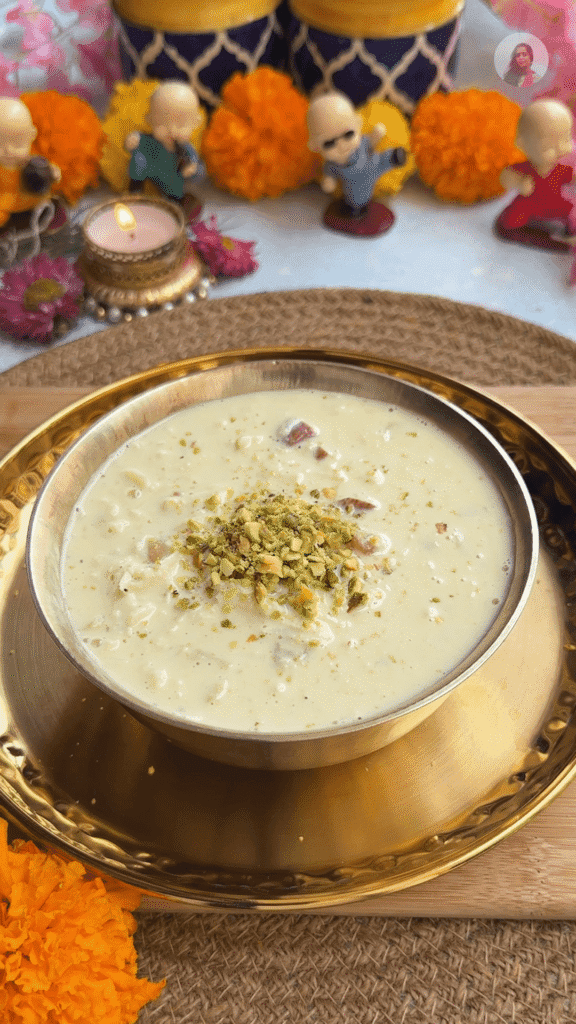
At Neera Food Lab, we like recipes that look festive but stay simple. The one thing that decides whether this kheer is creamy or watery is patience with the milk. The grated coconut goes in raw, and you keep the milk boiling and stirring until it thickens like rabri. Rush that part and the kheer stays thin; give it those extra minutes and the coconut softens into every spoonful.
Why You Will Love This Coconut Kheer
- Vrat-Friendly by Design: No rice and no grains. Fresh coconut gives the kheer its body, so it fits right into a Navratri fasting menu.
- Rabri-Like Without the Wait: Cooking the raw coconut in milk thickens it faster than reducing milk alone, so you get a rich, creamy texture in about 20 minutes.
- Only Six Ingredients: Milk, coconut, saffron, cardamom, sugar and dry fruits. Most of these are already in a festive kitchen.
Tips for This Coconut Kheer Recipe
- Use Fresh Coconut: Freshly grated coconut is soft and slightly sweet, and it melts into the milk as it cooks. Grate only the white part; the brown skin makes the kheer look dull.
- Keep It Boiling, Keep Stirring: The milk must keep bubbling until it looks like rabri. If you stop stirring, milk sticks to the bottom of the kadhai and the kheer picks up a burnt taste.
- Sugar Goes in Last: Add sugar only after the dry fruits and kesar milk, then cook for 2–3 minutes, stirring continuously, until it thickens again. Sugar added early slows the thickening and the kheer can catch at the base.
How to Serve Coconut Kheer on Navratri
This coconut kheer recipe makes the sweet ending a vrat thali needs after salty, filling dishes like sabudana khichdi, kuttu ki puri or aloo jeera. The cold, creamy kheer balances all that, and the saffron gives it a festive colour on the plate. It also works as bhog: make it in the morning, chill it, and it is ready by the evening aarti.
If you are making it for guests, set out small bowls and add the nuts just before serving so they stay crunchy. For a richer bowl, add a few extra pistachios and a pinch of crushed saffron on top.
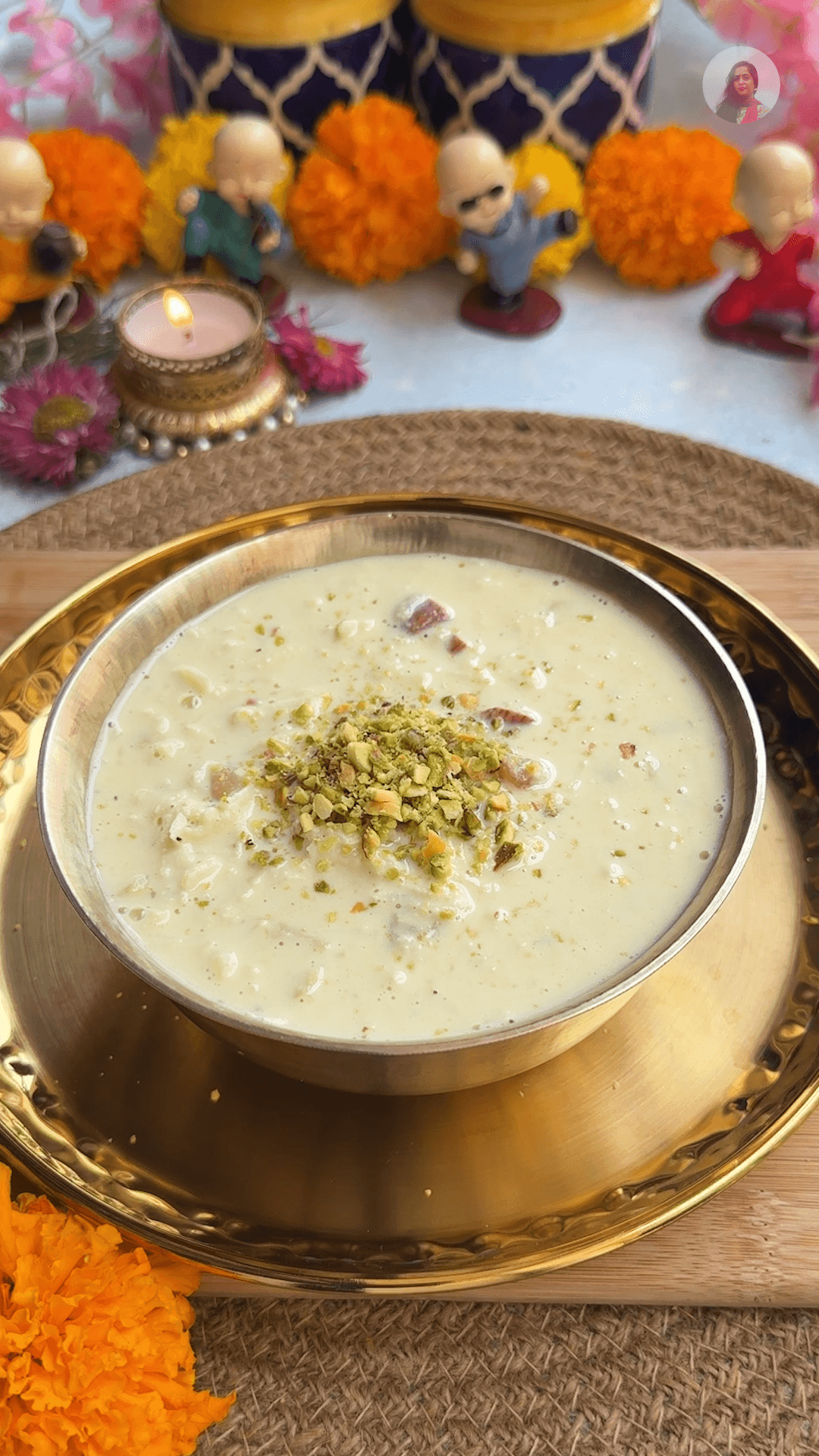
Coconut Kheer (Nariyal ki Kheer)
Course: DessertCuisine: North Indian2-3
bowls10
minutes20
minutes765
kcalA creamy, rice-free kheer made with fresh grated coconut, thickened milk, saffron and nuts. A simple Navratri vrat dessert that tastes best chilled.
Ingredients
- For the Kheer:
1 litre Milk (Doodh)
1 Fresh Coconut, grated (Nariyal)
½ cup Sugar (Cheeni), or less to taste
- For Flavour and Garnish:
6–8 Saffron strands (Kesar), soaked in 2 tbsp warm milk
1 tsp Cardamom Powder (Elaichi)
½ cup Chopped Almonds, Cashews and Pistachios (Badam, Kaju, Pista), or more as you like
Instructions
- Boil the Milk: Heat 1 litre milk in a heavy-bottomed kadhai and bring it to a boil.
- Add the Coconut: Add the freshly grated raw coconut to the boiling milk and mix well.
- Thicken: Keep boiling on medium flame, stirring often and scraping the sides, until the milk thickens like rabri.
- Add Flavour: Add the chopped dry fruits and saffron milk. Mix well.
- Add Sugar and Elaichi: Add sugar and cardamom powder, then cook for 2–3 minutes, stirring continuously, until the kheer thickens again.
- Chill and Serve: Switch off, let it cool, then chill in the refrigerator for a few hours. Garnish with chopped pistachios and serve cold.
Recipe Video
Notes
- Serving: Tastes best chilled; it is just as good warm on a cold evening. Serve as part of the Navratri vrat thali or as prasad.
- Storage: Keep covered in the fridge and eat within a day or two. The kheer thickens as it chills; stir in a splash of cold milk if you want it looser.
- Less Sweet: Start with less than ½ cup sugar and taste after it dissolves.
- Calories: Approximate, per bowl for 3 bowls made with full-cream milk.
Coconut Kheer FAQ
Can I eat coconut kheer during Navratri vrat?
Yes. This kheer has no rice or grains, just milk, coconut, sugar, saffron, cardamom and nuts. Follow your own family’s vrat rules if they differ.
Can I use desiccated coconut instead of fresh?
You can, but fresh coconut gives a softer, creamier kheer. Desiccated coconut stays chewier and makes the kheer a little drier.
Why is my coconut kheer thin?
The milk wasn’t boiled long enough. Keep it bubbling and stirring until it thickens like rabri before you add the sugar.
Can I use jaggery instead of sugar?
Yes, but switch off the flame and let the kheer cool slightly first. Jaggery added to boiling milk can make it split.
Try these next
- Creamy Rice Kheer Recipe: A Traditional Dessert for Every Occasion
- Gajar ka Halwa with Khoya: Traditional Winter Recipe
- Soft Til Gud Chikki (Gajak Style)
Making this coconut kheer recipe ahead for the festival? Cool it quickly, keep it covered in the fridge, and serve it the same or next day. For more on safe food handling, see the WHO’s five keys to safer food.





Leave a Reply