
Smoky Tandoori Chinese Noodles: When Desi Meets Dragon
Looking for a fun Indo-Chinese fusion recipe that isn’t your usual soy-sauce-heavy chowmein? These Smoky Tandoori Chinese Noodles bring together street-style stir-fried noodles and the bold, tangy flavour of a North Indian tandoor.
Here, regular stir-fry sauces make way for a rich, yogurt-based tandoori paste made with mustard oil, kasuri methi, and warm spices. Each strand of noodle gets coated in a thick, masaledar layer instead of a thin, watery sauce. This makes the dish feel hearty, satisfying, and full of flavour in every bite.
It’s perfect for weekend dinners, house parties, or those days when you’re bored of the usual Hakka Noodles and want something spicy, smoky, and different—ready in under 30 minutes.
Why You’ll Love These Tandoori Chinese Noodles
- Bold Indo-Chinese fusion flavour with a proper smoky, tandoori-style kick.
- Uses simple pantry ingredients like curd, basic spices, and Hakka noodles.
- Great for spice lovers, college-style “Chinese bhel” fans, and street food cravings.
- Works as both a main course and a loaded evening snack.
Key Tips for Perfect Tandoori Noodles
- Whisk the paste well: Whisk the curd and mustard oil until you get a smooth, orange emulsion. This keeps the curd from splitting in the hot pan.
- Cook on high flame: Toss veggies and noodles on high heat. This keeps them crunchy and helps cook out the raw flavour of the spices.
- Do not skip mustard oil: Mustard oil gives that sharp, street-style aroma and taste. Refined oil won’t create the same punch.
- Parboil noodles correctly: Boil the noodles just until al dente, then rinse and toss with a few drops of oil. This prevents them from sticking or turning mushy later.
Make It Your Style
- For extra protein, add lightly sautéed paneer cubes or tofu along with the veggies.
- To make it milder for kids, reduce the regular red chilli powder and skip green chillies in the paste.
- You can finish the noodles with a squeeze of lemon and extra spring onion greens for a bright, fresh taste.
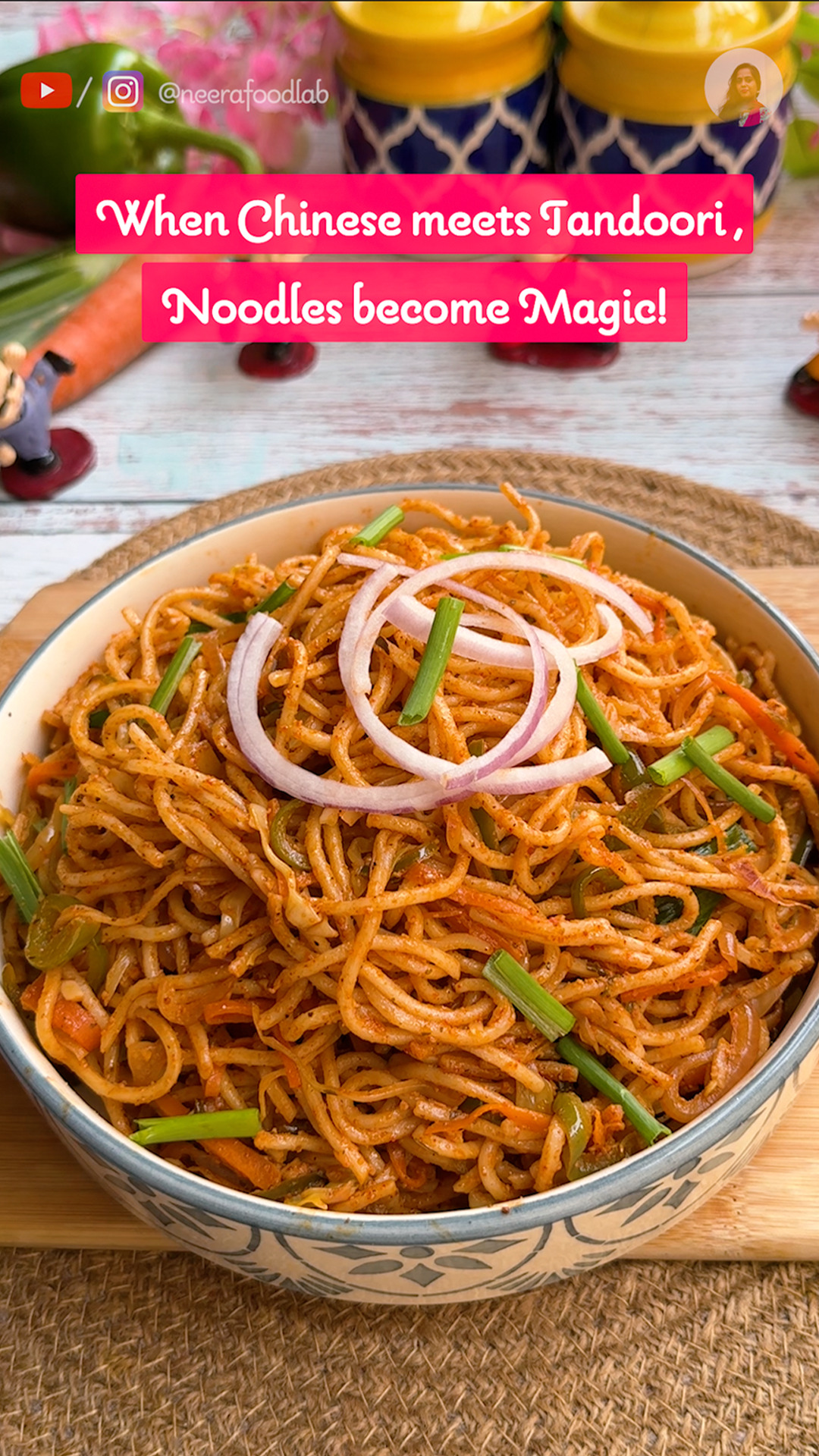
Smoky Tandoori Chinese Noodles
Course: Main Course / SnackCuisine: Indo-Chinese Fusion2
servings20
minutes10
minutes310
kcalA unique Indo-Chinese fusion recipe where stir-fried noodles are tossed in a spicy, yogurt-based Tandoori masala paste.
Ingredients
- For The Tandoori Paste:
½ cup Curd (Dahi), thick
3–4 tbsp Mustard Oil
1 tbsp Kashmiri Red Chilli Powder (for color)
½ tbsp Red Chilli Powder (for heat)
1 tbsp Coriander Powder
½ tbsp Garam Masala
½ tbsp Cumin Powder (Jeera)
¼ tbsp Amchur Powder (Dry Mango Powder)
1 tbsp Kasuri Methi (crushed)
1 tbsp Lemon Juice
- The Binding & Spices:
1 plate Boiled Noodles (Hakka or regular)
2 tbsp Oil
2 tbsp Ginger-Garlic-Green Chilli Paste
1 Onion (sliced)
1 Capsicum (sliced)
½ cup Carrot (julienned)
1 cup Cabbage (shredded)
1 tsp Soya Sauce
½ tsp Black Pepper Powder
A pinch Ajinomoto (MSG) – Optional
Spring Onion Greens (for garnish)
Instructions
- Make the Tandoori Paste: In a mixing bowl, add coriander powder, garam masala, cumin powder, amchur, Kashmiri red chilli powder, regular red chilli powder, and crushed kasuri methi.
Pour in the mustard oil and mix well so the spices are coated. Add the curd and lemon juice, then whisk until you get a smooth, vibrant orange paste with no lumps. - Sauté the Aromatics: Heat oil in a large kadhai or wok on high heat. Add the ginger-garlic-green chilli paste and sauté for about 30 seconds until fragrant and lightly cooked.
- Toss Veggies: Add sliced onions, capsicum, carrot, and cabbage to the kadhai.
Toss on high flame for around 2 minutes until the veggies slightly soften but still remain crunchy. - Cook the Tandoori Masala: Reduce the flame slightly (medium-high). Add the prepared tandoori paste and soya sauce to the veggies.
Cook for 3–4 minutes, stirring constantly, until the raw smell of the spices disappears and the oil starts to separate from the masala. - Add the Noodles: Add the boiled noodles to the pan along with black pepper powder and a pinch of Ajinomoto, if using. Gently loosen any clumps of noodles so they mix evenly with the masala.
- Toss and Coat: Increase the flame back to high. Toss the noodles quickly but gently so that every strand is coated with the thick tandoori masala without breaking the noodles. Adjust salt only if needed, as soya sauce and noodles already contain some salt.
- Garnish and Serve: Switch off the flame. Garnish generously with chopped spring onion greens. Serve the smoky Tandoori Chinese Noodles immediately while hot for the best texture and flavour.
Recipe Video
Notes
- Noodles tend to lose their texture and become soft or sticky when reheated, so it is best to enjoy this dish fresh.
- You can prepare the tandoori paste 1 day in advance and keep it refrigerated in an airtight contain
- Boiled noodles can be cooked ahead, rinsed, tossed with a few drops of oil, and stored in the fridge for a few hours before stir-frying.er. Bring it to room temperature and whisk again before using.
Recipe FAQs
Q1. Can I make these noodles without Ajinomoto (MSG)?
Yes, Ajinomoto is completely optional. You still get amazing flavour from the spices, mustard oil, and kasuri methi, so feel free to skip it if you prefer.
Q2. Which noodles work best for this recipe?
Hakka noodles work best, but you can also use regular wheat noodles or flat noodles. Just ensure you boil them al dente so they don’t turn mushy while stir-frying.
Q3. Can I add paneer or other veggies?
Absolutely. You can add paneer cubes, baby corn, mushroom, or broccoli. Stir-fry them with the other veggies or marinate paneer lightly in some of the tandoori paste before adding.
Q4. How spicy are these Tandoori Chinese Noodles?
This recipe is moderately spicy because of the red chilli powder and green chilli in the paste. You can reduce the regular red chilli powder or skip green chilli to make it more kid-friendly.






Leave a Reply